A History Of Everyday Things In England
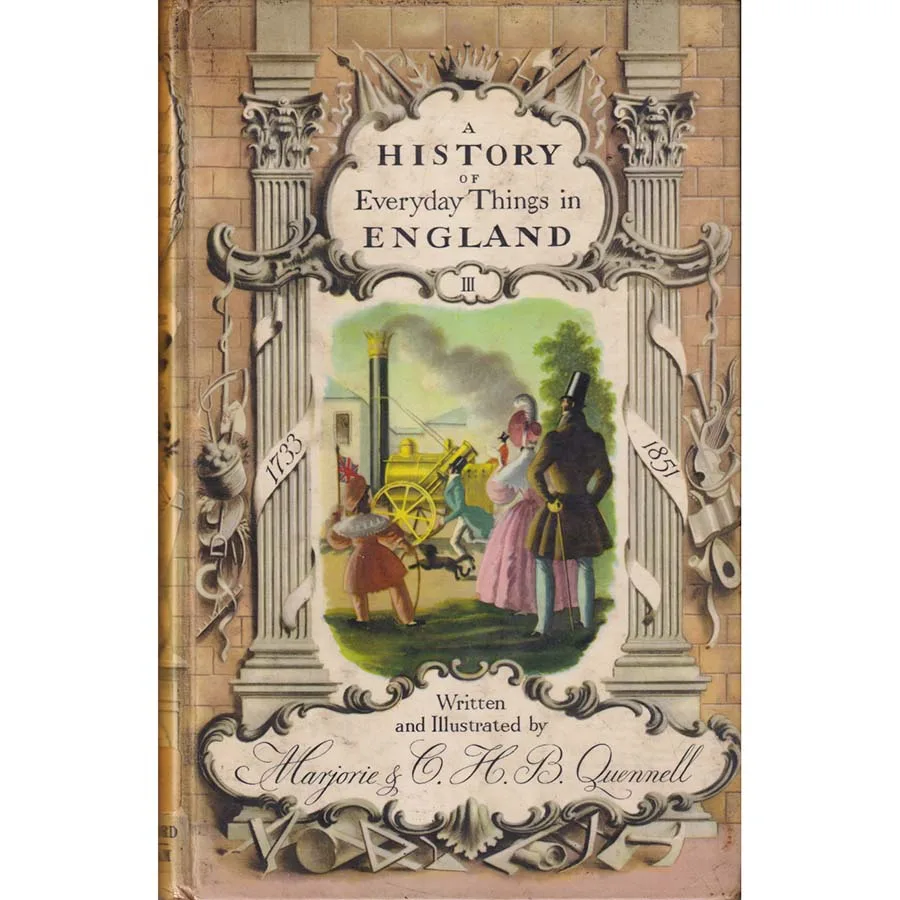
Publisher: BT Batsford
Format: Paperback
ISBN: none
History is traditionally concerned with kings, queens, battles, treaties and the occasional spectacular execution of somebody who backed the wrong side. Meanwhile, ordinary people were busy with considerably more pressing matters, such as finding something to eat, keeping the rain out of their houses and inventing increasingly ingenious ways of making everyday life slightly less uncomfortable. Fortunately, Marjorie and C. H. B. Quennell realised that the history of all this ordinary activity was every bit as fascinating as the achievements of people wearing crowns.
A History of Everyday Things in England (1967), published by B. T. Batsford, is a wonderfully absorbing exploration of the objects, customs, buildings and practical arrangements that shaped English life through the centuries.
Rather than concentrating exclusively upon great historical events, the Quennells investigate how people actually lived. What did their houses look like? How were their clothes made? What tools did they use? How did they furnish their rooms, prepare food, organise work and survive without central heating, supermarkets or the reassuring prospect of ordering absolutely anything from the internet?
The answers reveal an extraordinary world of craftsmanship, invention and gradual technological change. Furniture, household utensils, agricultural implements, clothing, transport and architecture become valuable witnesses to the development of English society.
There is something particularly entertaining about discovering how much ingenuity our ancestors devoted to solving problems that modern people scarcely recognise as problems. Washing clothes, preserving food, heating rooms and travelling between towns could require astonishing quantities of labour, patience and occasionally an unreasonable degree of optimism.
The Quennells approach these subjects with scholarly curiosity and a gift for making material history accessible. Their work is particularly celebrated for its illustrations, which help bring vanished objects, buildings and techniques back into view. Here, history is not simply a succession of dates but a tangible world filled with things that people made, used, repaired and eventually discarded.
The book also reveals how slowly some aspects of everyday life changed, even while monarchs succeeded one another and governments enthusiastically reorganised the country. A king might lose his head, a dynasty might collapse, but somebody still had to mend the roof and decide what was for dinner.
Condition: Good – Ex-Library. This 1967 Batsford edition is a former library book, with the usual signs of institutional ownership and handling. It has evidently enjoyed a career in public service before entering the second-hand book trade, an honourable retirement for a volume dedicated to the everyday lives of previous generations.
Offered by Crappy Old Books, where we appreciate objects that have survived long after their original owners disappeared, and where preserving old things is less a historical philosophy than the entire business model.
No ISBN, naturally. In 1967, books could still exist without numerical identification, and civilisation somehow continued.
A delightful exploration for readers who suspect that history’s most interesting stories are not always about those who ruled England, but about the millions who actually had to live in it.
After all, kings come and go, but somebody always has to wash the dishes.
Keep browsing: See more History books Other books by Marjorie and CHB Quennell